
Reviewed · WALKING TOURS
A walk through life in communist Yugoslavia
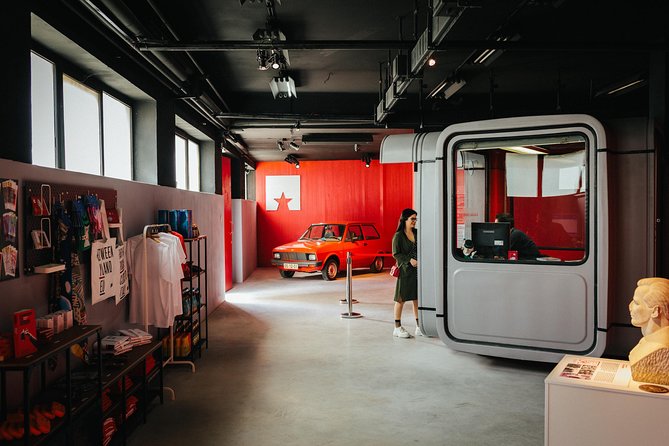
Dubrovnik is famous for medieval walls and sea views, but the Red History Museum turns your attention to a far newer past: everyday life in communist Yugoslavia. In a compact 300-square-meter space, you move through room sets, objects, music, and interactive displays that explain how the system shaped ordinary people.
I like the museum’s physical detail, especially its genuine 20th-century artifacts and time-capsule feel. I also like that it tackles more than political leaders, showing design, popular culture, secret agencies, and daily routines. The main drawback is that the final years and collapse of the system receive less attention than the earlier period.
In This Review
- Key points to know
- Why Dubrovnik’s recent past matters
- Inside the 300-square-meter museum
- Following daily life under the Communist Party
- Politics, secret agencies, and the Non-Aligned position
- What the museum does best
- The limits of a short museum visit
- Is the $211 price good value?
- Who should book the Red History Museum?
- Should you book this Dubrovnik museum?
- FAQ
- Where does the Red History Museum experience begin?
- How long does the museum visit last?
- What does admission include?
- Can I use a mobile ticket?
- Is the museum accessible by public transportation?
- What is the cancellation policy?
Key points to know
- Room sets make the era easy to picture: See how an ordinary Yugoslav home and public life might have looked through period objects and displays.
- The museum covers more than politics: Expect material on art, design, music, secret agencies, and Yugoslavia’s Non-Aligned position.
- Plan about 90 minutes: The stated visit lasts roughly 50 minutes to 1 hour 35 minutes, with the main itinerary allowing 1 hour 30 minutes.
- Prepaid entry saves a step: Your mobile ticket confirms admission for your chosen day and avoids buying a ticket at the counter.
- It is useful for first-time learners: If communist Yugoslavia is unfamiliar to you, the exhibits provide a clear introduction to Croatia’s recent past.
- The focus is stronger on daily life than the breakup: You may want additional reading if the late 1980s and the end of Yugoslavia interest you most.
Why Dubrovnik’s recent past matters
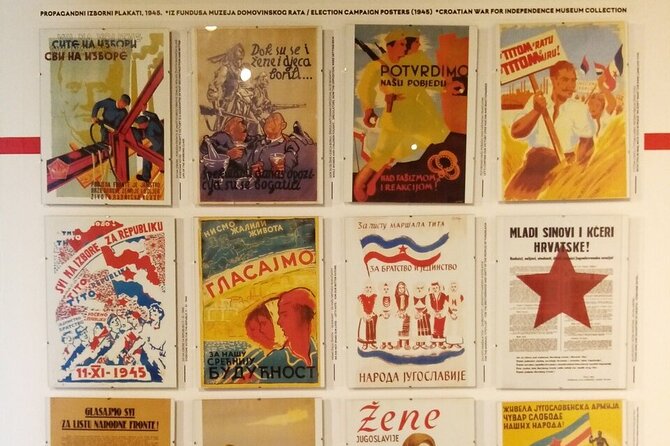
The Red History Museum fills a gap that Dubrovnik’s old town cannot. Most sightseeing here points toward medieval republics, stone fortifications, churches, and maritime trade. This museum shifts the clock forward into the 20th century, when Croatia was part of socialist Yugoslavia.
That change of subject is the reason to come. You are not simply looking at old objects in glass cases. The museum uses room sets and interactive displays to show how political ideas reached into homes, workplaces, entertainment, design, and personal choices.
If you know little about Yugoslavia, the visit gives you a starting point. If you already know the broad political story, the everyday objects can make it more concrete. A political system can feel remote when reduced to dates and leaders. A familiar household item, a song, or a period interior gives you a better sense of how that system was experienced day by day.
The museum also helps explain why Yugoslavia did not fit neatly into the usual Cold War categories. Its exhibits address the Non-Aligned movement, along with the country’s distinctive political position between major power blocs. You get a glimpse of a society that followed its own model rather than simply copying the Soviet system.
More walking tours in Dubrovnik:
- Dubrovnik: Old Town Walking Tour
★ 4.8 · 5,174 reviews - Dubrovnik Discovery Old Town Walking Tour
★ 5.0 · 4,458 reviews - Dubrovnik: Game of Thrones Walking Tour
★ 5.0 · 1,732 reviews
Inside the 300-square-meter museum
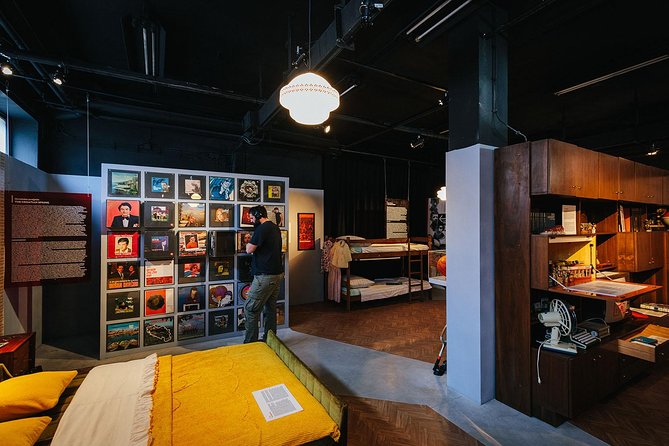
The museum is newly opened and built as an interactive experience rather than a traditional hall of paintings or documents. The 300-square-meter space is small enough to cover in one visit without tiring you, yet it has enough subject matter to fill around an hour and a half.
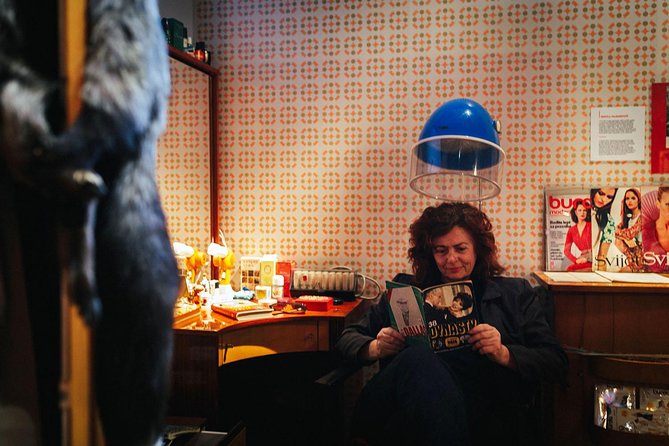
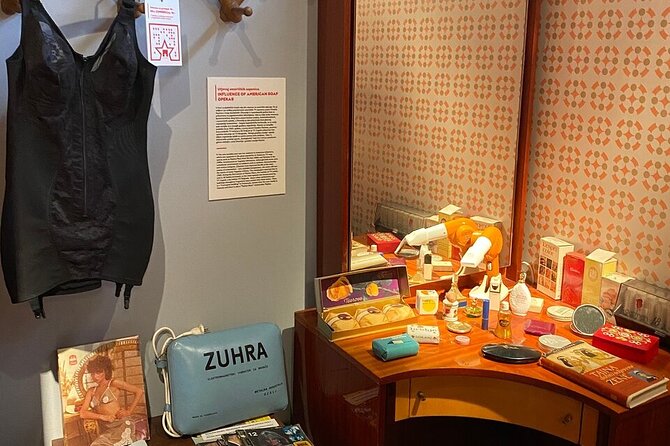
The room sets are a major strength. They give the collection a domestic scale. Instead of viewing the past only through official displays, you can look at the objects and settings associated with ordinary routines. That approach makes the period more approachable, particularly if you did not grow up in the former Yugoslavia.
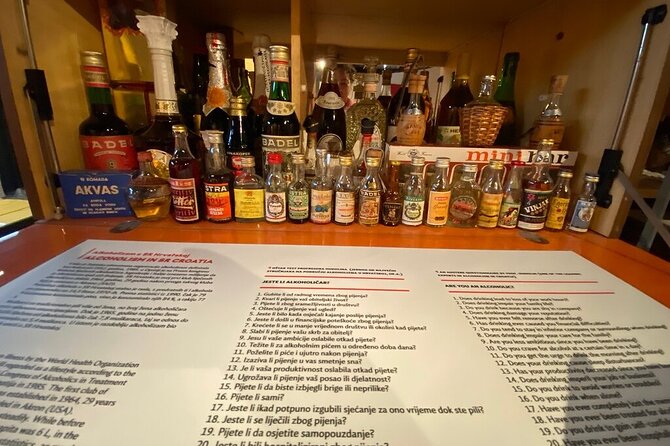
You will also encounter genuine 20th-century artifacts. Their value is not just age. Together, they show the design choices, habits, and material culture of a particular period. The museum’s appeal comes from seeing these things arranged as part of a story, rather than treated as unrelated antiques.
Interactive elements and older and newer forms of technology help the exhibits move beyond static labels. The exact balance of technology and objects may vary as you go from one display to the next, but the purpose is clear: to let you connect political history with real life.
Allow more than a quick 20-minute stop. The listed visit can run from about 50 minutes to 1 hour 35 minutes, while the main visit time is given as 1 hour 30 minutes. That makes this a good fit for a free morning or afternoon, not a rushed stop between two tightly scheduled attractions.
Following daily life under the Communist Party
The most useful part of the museum is its attention to daily life. You learn about people living under the watchful eye of the Communist Party, but the presentation is not limited to rules and institutions. It also looks at how people lived, listened to music, responded to design, and understood the society around them.
That wider frame matters. A visit focused only on repression would miss the complexity of the Yugoslav experience. A visit focused only on popular culture would soften the political reality. By placing ordinary life beside politics and state power, the museum encourages you to hold both ideas at once.
The room sets support that balance. You might find that the most memorable displays are not the ones with the most text, but the ones that let you picture a person moving through a normal day. Those details can help you understand why the period still matters to people in Croatia and across the former Yugoslavia.
The collection also addresses art and design. This is useful for anyone interested in how political systems influence visual style and public culture. Design can reveal what a society valued, what it wanted to project, and how it presented itself to citizens and outsiders.
The museum’s musical element adds another layer. You can listen to some of the era’s greatest hits, giving the visit a sense of popular culture rather than a purely academic tone. Music often reaches memory faster than a written explanation, so this is a smart way to make the period feel less distant.
Politics, secret agencies, and the Non-Aligned position
The political sections give the visit its backbone. You learn how Yugoslavia was governed and how the Communist Party shaped public life. The museum also covers secret agencies, an important part of understanding the pressure and surveillance associated with a totalitarian society.
This material may be especially valuable if your knowledge of the region comes mainly from the later wars or from a few broad Cold War references. The displays place those later events within a longer political story. They do not make the past simple, but they give you more pieces to work with.
The Non-Aligned material is another reason the museum is more than a local nostalgia display. Yugoslavia’s international position was unusual, and the museum explains the way of the Non-Aligned movement as part of the country’s identity. That subject gives you a wider view of how Yugoslavia presented itself beyond its borders.
You should not expect a full university course in political theory. The space is limited, and the visit is designed to be accessible. Still, the mix of state power, foreign policy, culture, and domestic life gives you a useful outline.
A completely different way to spend a day in Dubrovnik:
- Blue Cave Small-Group Boat Tour from Dubrovnik
★ 5.0 · 9,360 reviews - Full-Day Dubrovnik Elaphite Islands Cruise with Lunch and Drinks
★ 5.0 · 8,823 reviews - Dubrovnik: Epic Game of Thrones Tour + Lokrum & Saver Option
★ 4.9 · 5,995 reviews - Dubrovnik: Elaphiti Islands Full-Day Cruise with Lunch
★ 5.0 · 5,938 reviews
What the museum does best
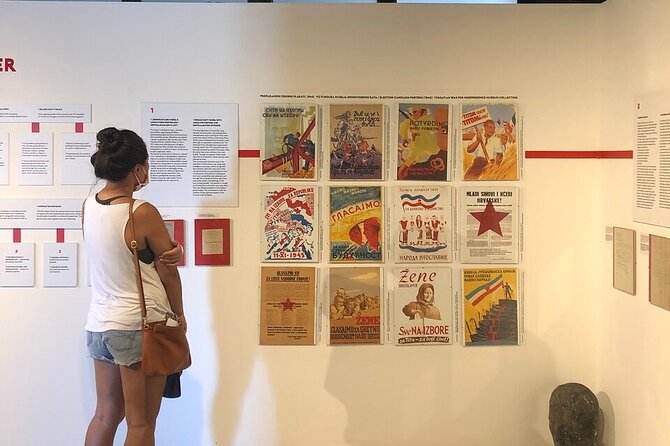
The museum’s strongest quality is its ability to make an unfamiliar period understandable quickly. If you have never studied communist Yugoslavia, you can leave with a clearer idea of how the system worked and how it touched ordinary people.
I also appreciate its physical approach. Genuine artifacts and reconstructed settings give the past texture. You do not have to rely on imagination alone. The objects show that history is made from household things, entertainment, official symbols, and personal routines as much as from speeches and laws.
The museum is also a good rainy-day or hot-afternoon choice in Dubrovnik. The visit is indoors, contained, and long enough to feel worthwhile without taking over your day. Its location at Ul. Svetog Križa 3 makes the meeting point straightforward, and the activity ends where it begins.
The highly favorable overall response, with a 4.9 rating from 187 ratings and a 98 percent recommendation rate, fits the museum’s clear purpose. The strongest praise centers on its informative approach, unusual character, affordability, and ability to explain Croatia under communist rule. Those are precisely the areas where the museum earns its place on a Dubrovnik itinerary.
The limits of a short museum visit
The museum cannot tell every part of Yugoslavia’s story in equal depth. The main weakness is the treatment of the system’s final years and breakdown. If you want a detailed account of the political crisis, nationalism, economic troubles, the late 1980s, and the breakup, you may find the coverage too brief.
That is not necessarily a flaw for a compact museum. The visit is built around a broad introduction to life under the regime, not a complete account of every decade. Still, you should know what you are booking. The experience is strongest when you want context and atmosphere, not a full chronological study of Yugoslavia’s end.
The museum’s small size has both benefits and limits. You can see it without committing half a day, but the number of displays is naturally limited by the 300-square-meter space. Some subjects may receive only a short explanation.
I would pair the visit with your own reading if the political history is a major reason for your trip. The museum gives you a solid base, then you can explore the later story in greater detail elsewhere. For many people, that is the right order: first see how the society functioned, then study how and why it fell apart.
Is the $211 price good value?
The stated price is $211, so you should look closely at what that figure means before booking. For a single museum admission lasting roughly an hour to an hour and a half, that is a substantial amount. The experience makes the most sense at that price if the booking covers more than one person, or if the convenience and prepaid arrangement matter to you.
The price includes admission and a mobile ticket. You secure entry for your chosen day and avoid buying at the ticket counter. That is useful if you prefer to arrange your schedule before arriving, but it does not turn a short museum visit into a full-day tour.
The museum itself is distinctive enough to justify paying for an admission if modern Croatian history interests you. It is not a generic collection that you could easily replace with a quick walk through Dubrovnik. The room sets, real artifacts, music, and political material offer a focused experience that you will not get from the city’s medieval sights.
Still, compare the total booking cost with the museum’s own admission terms before you pay. The supplied information calls the experience affordable in one assessment, but the stated $211 price requires careful checking, particularly for a solo visitor. The practical value depends on the number of people included and the final price shown at checkout.
Who should book the Red History Museum?
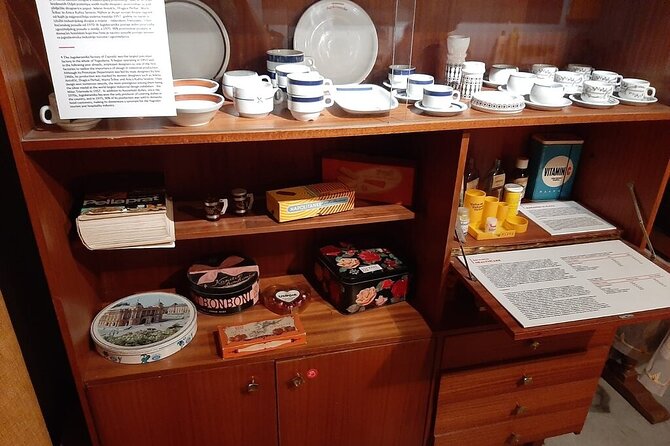
I would recommend it to you if you want to understand Croatia beyond its old stone streets. It suits history-minded visitors, people curious about the former Yugoslavia, and anyone who prefers seeing ordinary objects and interiors rather than reading only long political panels.
It is also a strong choice for visitors who are unfamiliar with the region. The exhibits offer enough background to make the period less confusing, while the everyday focus keeps the subject grounded.
Families and mixed-interest groups may find the interactive format easier to handle than a long, text-heavy museum. Most people can participate, and service animals are allowed. The site is near public transportation, and the maximum group size is 200, though the actual feel of your visit will depend on how many people arrive at the same time.
I would be less likely to book it if your main goal is a detailed study of the breakup of Yugoslavia. The museum touches the country’s history from beginning to end, but the final breakdown is not its strongest section. In that case, treat this as an introduction and plan a separate source for the later period.
You can cancel for a full refund if you do so at least 24 hours before the start time. Changes or cancellations made within 24 hours are not accepted for a refund, and the cut-off follows local time.
Should you book this Dubrovnik museum?
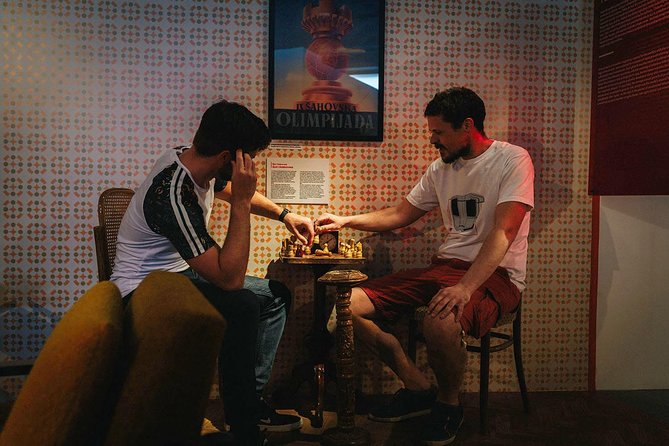
Book it if you want a compact, thoughtful look at how communist Yugoslavia shaped everyday life. The period room sets, genuine artifacts, music, and interactive displays give the subject a human scale, while the sections on politics, secret agencies, and the Non-Aligned movement provide needed context.
Think twice if the $211 charge is for only one person, or if you want a long account of Yugoslavia’s final years. For the right price and the right interest, this is one of Dubrovnik’s more useful modern-history stops. Just leave knowing that it begins the conversation about the country’s collapse rather than finishing it.
FAQ
Where does the Red History Museum experience begin?
It begins at the Red History Museum, Ul. Svetog Križa 3, 20000 Dubrovnik, Croatia.
How long does the museum visit last?
The stated duration is approximately 50 minutes to 1 hour 35 minutes. The main visit time is listed as about 1 hour 30 minutes.
What does admission include?
Admission to the Red History Museum is included. The museum uses interactive exhibits, room sets, genuine 20th-century artifacts, and technology to present life in communist Yugoslavia.
Can I use a mobile ticket?
Yes. The experience includes a mobile ticket, and prepaid admission secures entry on your chosen day.
Is the museum accessible by public transportation?
The museum is near public transportation.
What is the cancellation policy?
You can cancel at least 24 hours before the experience start time for a full refund. Cancellations or changes made less than 24 hours before the start time are not accepted for a refund.
Newest reviews from Dubrovnik
- Walls of Liberty: A Self-Guided Audio Tour of Dubrovnik★ 3.5 · 3 reviews
- Dubrovnik: Private Tour to Montenegro – Kotor & Perast★ 5.0 · 3 reviews
- Korcula, Ston, Wine Tasting and Lunch – Tour from Dubrovnik★ 5.0 · 3 reviews
- Private Transfer Dubrovnik Airport to Dubrovnik★ 5.0 · 3 reviews
- From Dubrovnik Private tour to Korčula Island★ 3.7 · 3 reviews
- Dubrovnik History, Sweets & Liquors in a Private Palace★ 5.0 · 3 reviews
- Private tours created by You from Dubrovnik region★ 5.0 · 3 reviews
- Dubrovnik: Game of Thrones Walking, Car and Boat Tour★ 5.0 · 3 reviews
Walking Tours, compared.




City Walls Early Morning or Sunset Walking Tour
Read our review →
Browse the lists this tour appears in