
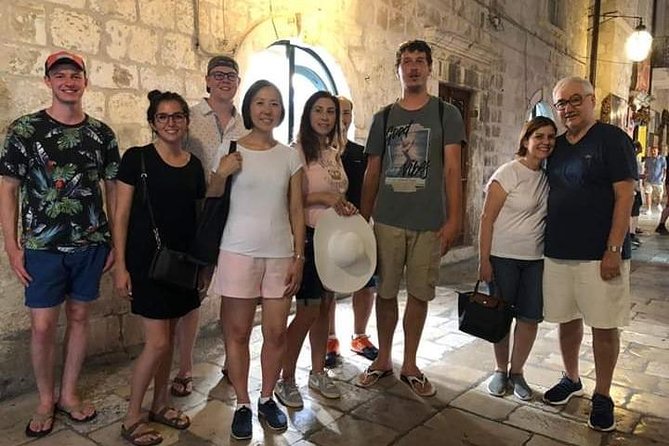
Reviewed · WALKING TOURS
Dubrovnik By Night Walking Tour
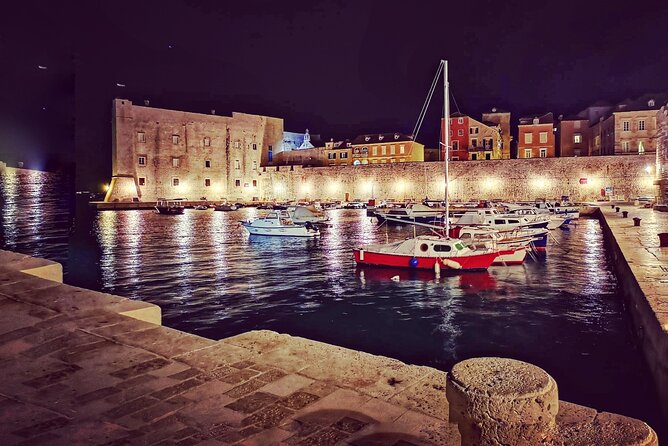
Dubrovnik is at its best after the heat fades and the stone lanes begin to glow. This 90-minute evening walk takes you from Pile Gate through the Old Town, past the Rector’s Palace and Cathedral, and into narrow streets that are easy to miss in daylight.
I like two things here: the timing gives you a cooler, quieter look at Dubrovnik, and the route covers the major sights without charging admission to each stop. Guides such as Mihaela, Daniela, Petra, and Davor have been praised for making the city’s past personal and understandable. The tradeoff is simple: you stay outside the buildings, so this is an orientation walk rather than a museum tour.
In This Review
- Key points
- Why Dubrovnik Works Better After Sunset
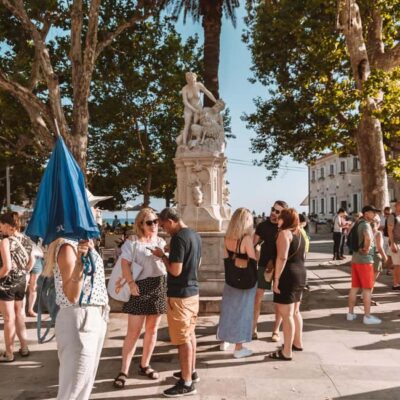
- Meeting Your Guide at the Amerling Fountain
- Pile Gate Gives You the City’s Basic Plan
- Franciscan Monastery, Onofrio Fountain, and the First Look at Stradun
- Walking Stradun After the Crowds Thin
- Luza Square and Dubrovnik’s Civic Center
- Rector’s Palace Brings Power and Intrigue Into View
- The Cathedral and Gundulic Square
- Prijeko Street Shows the Local-Scale Dubrovnik
- The Guides Make the Biggest Difference
- Price, Pace, and What You Actually Receive
- Booking, Weather, and Cancellation Details
- Who Should Book This Dubrovnik Night Walk?
- Should You Book It?
- FAQ
- How long is the Dubrovnik By Night Walking Tour?
- Where does the tour begin?
- Where does the tour end?
- What sights are included on the route?
- Are entrance tickets included?
- How many people can join the tour?
- Can I cancel for a full refund?
Key points
- Start beside Pile Square: Meet your guide at the Amerling fountain, outside the walls, under a blue umbrella.
- See the Old Town lit up: The evening setting softens the heat and gives Stradun, Luza Square, and the churches a different look.
- Learn from local guides: Guides including Mihaela, Daniela, Petra, Goran, and Davor have led walks with a strong focus on history and personal stories.
- Cover the essential sights: The route includes Pile Gate, the Franciscan Monastery, Onofrio Fountain, Rector’s Palace, the Cathedral, and Gundulic Square.
- Finish in the center: The walk ends at Luza Square, a handy spot for dinner or further exploring.
- Expect a walking overview: There are no listed interior visits, and the group can include up to 20 people.
Why Dubrovnik Works Better After Sunset
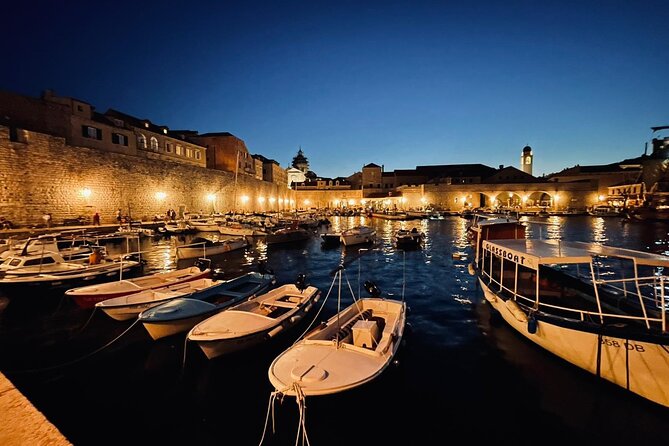
Dubrovnik’s Old Town can feel hot and crowded during the day, especially in summer. An evening start gives you a more comfortable pace and lets you see the pale stone under street lighting rather than harsh midday sun.
Some departures begin around sunset, with times such as 6:00 or 8:00 p.m. appearing in the tour schedule and past bookings. Check your exact start time when you reserve, since the evening mood changes from one departure to another.
I especially like this tour for a first night in town. You get a quick map of the Old Town, hear the basic story of the former republic, and learn where the main squares and lanes connect. After that, you can return on your own for dinner, shopping, or a closer look at a sight that caught your attention.
The setting also helps the tour feel less like a checklist. Stradun is still the main spine of Dubrovnik, but side lanes and stairways take on more character at night. The lit bell tower, palace fronts, fountains, and churches give you plenty to look at while the guide fills in the background.
More walking tours in Dubrovnik:
- Dubrovnik: Old Town Walking Tour
★ 4.8 · 5,174 reviews - Dubrovnik Discovery Old Town Walking Tour
★ 5.0 · 4,458 reviews - Dubrovnik: Game of Thrones Walking Tour
★ 5.0 · 1,732 reviews
Meeting Your Guide at the Amerling Fountain
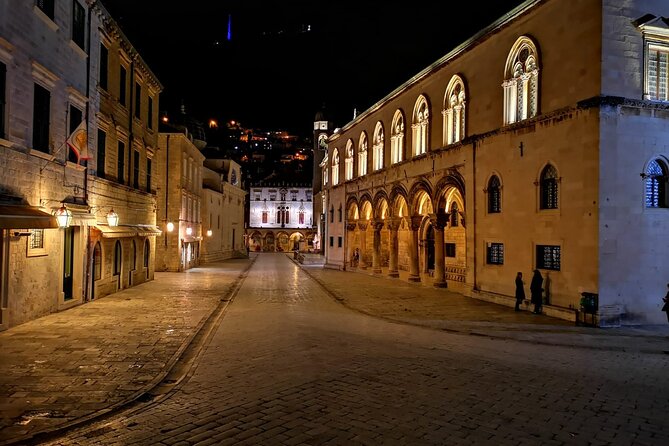
The walk begins at the Amerling fountain at Pile Square, outside the city walls. Look for the guide with a blue umbrella, next to the Dubravka gift shop.
The formal meeting address is Brsalje ul. 2, Dubrovnik. These details matter because Pile is a busy arrival point, and the Old Town has several nearby streets that can look alike once the crowds thin out. Give yourself enough time to find the fountain rather than arriving at the last minute.
There is no hotel pickup. You make your own way to Pile, and the tour finishes inside the Old Town at Luza Square. Local buses and other public transportation serve the area, but transportation to and from the sights is not part of the booking.
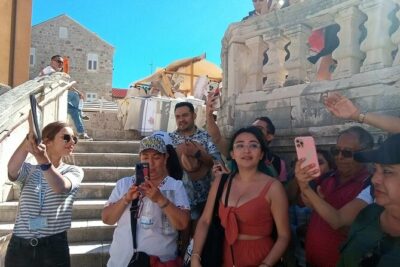
At the start, the guide spends about five minutes gathering the group and getting everyone oriented. The maximum group size is 20, which is manageable for a walking tour, though the experience can depend on how clearly the guide speaks and how close you remain to the group.
Pile Gate Gives You the City’s Basic Plan
After meeting outside the walls, you enter through Pile Gate. The guide stops by the city map for roughly ten minutes and explains how Dubrovnik is arranged.
This is a useful beginning because the Old Town is compact but not always easy to read at first. You see the main east-west route, the position of the squares, and the pattern of the side streets before walking farther in.
Pile Gate also gives the guide a natural place to explain Dubrovnik’s political and historical background. The city developed as a maritime republic, and its walls, gates, streets, and public buildings all reflect the need to protect an independent trading center.
Do not expect a long lecture at this point. The introduction is short, and the more detailed stories come as you move through the Old Town. That format works well if you prefer history tied to real places rather than a long talk in one location.
Franciscan Monastery, Onofrio Fountain, and the First Look at Stradun
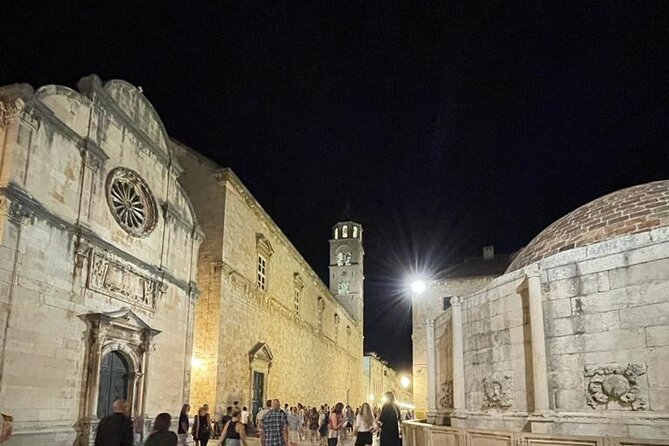
Inside the walls, the route reaches the Franciscan Church and Monastery. Here you hear about the old pharmacy and Dubrovnik’s early water supply, including the Onofrio Fountain.
The stop lasts about 15 minutes, making it one of the longer pauses on the route. The fountain is easy to appreciate as a piece of public infrastructure, not just as decoration. It reminds you that daily life in a medieval city depended on practical systems as much as grand churches and palaces.
The monastery and church are also good reference points for understanding Stradun. You get a sense of how religious, civic, and commercial life came together along the main street.
The important limitation is that the itinerary lists exterior explanations rather than an included visit inside the monastery or church. If you want to see interiors, the pharmacy, or a collection at close range, plan a separate visit and check opening hours independently.
More Dubrovnik tours worth comparing
- Dubrovnik: Sea Kayaking&Snorkelling Guided Day/Sunset Tours
★ 4.8 · 1,554 reviews - Dubrovnik: City Walls Early Morning or Sunset Walking Tour
★ 4.8 · 1,523 reviews - Sunset Sea Kayaking and Wine Dubrovnik
★ 5.0 · 949 reviews - Dubrovnik: Sunset Zip Line Experience Followed by Wine
★ 4.9 · 921 reviews
Walking Stradun After the Crowds Thin
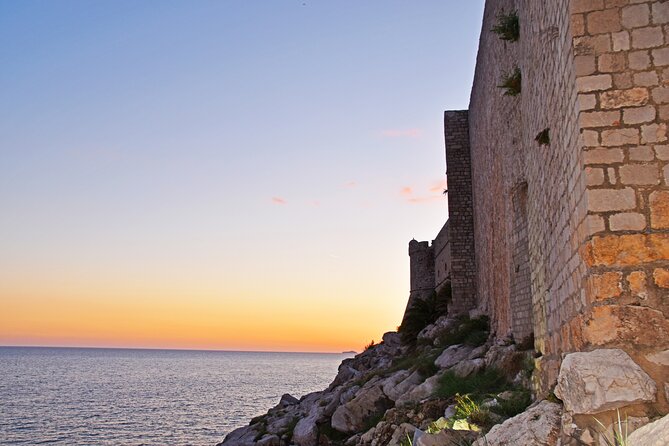
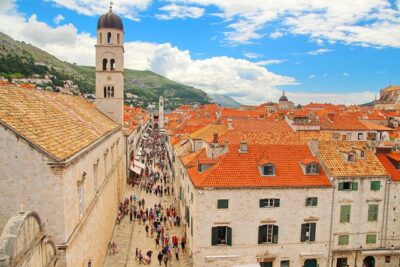
Stradun is Dubrovnik’s most famous street and the route’s central corridor. The guide discusses its houses, shops, and role as the Old Town’s main public passage.
In daylight, Stradun can feel like a busy shopping street. At night, you may find it easier to notice the uniform stone facades and the way the street leads your eye toward the squares at either end.
This is also where the tour’s pacing becomes clear. You are not rushing from one attraction to another. The stop is listed at about ten minutes, enough for an explanation and a few photographs before continuing.
I would not choose this walk if you want a detailed architectural study of every building on Stradun. I would choose it if you want a clear first look at the street and enough context to make later independent wandering more rewarding.
Luza Square and Dubrovnik’s Civic Center
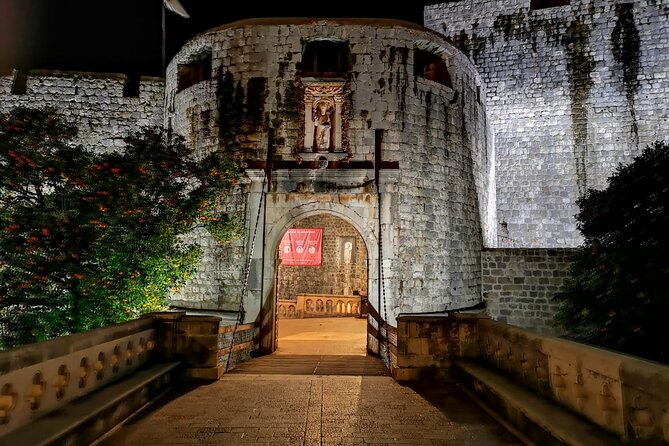
The walk continues to Luza Square, the main square of the Old Town. The Church of Saint Blaise sits at its center, with the Bell Tower and Sponza Palace nearby.
This compact square brings together several of Dubrovnik’s most recognizable buildings. The guide uses the setting to explain the city’s civic and religious life, as well as the way public spaces were organized.
At night, the square is a particularly good place to pause. The architecture is close together, so you can look from the church to the clock tower and palace without covering much ground. It is also a useful location to remember for later, since the tour ends here.
The visit lasts about ten minutes. That is enough for orientation, but not enough for an exhaustive account of each building. You will get more from the stop if you listen for the relationships between the buildings rather than treating each one as a separate photo stop.
Rector’s Palace Brings Power and Intrigue Into View
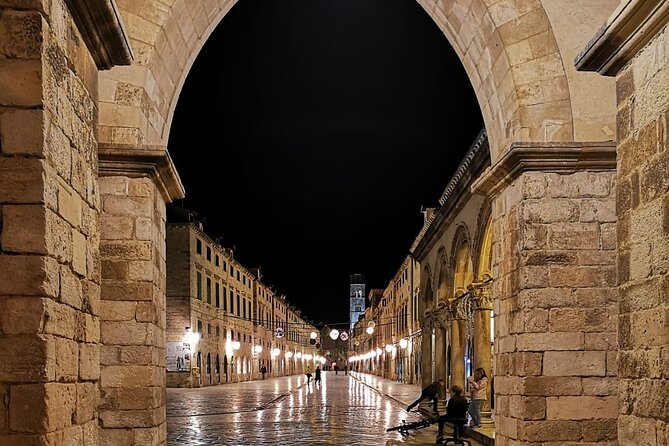
Rector’s Palace is presented as one of Dubrovnik’s most impressive buildings. The guide explains its structure, history, and present-day use.
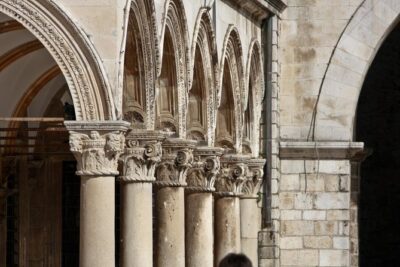
This is one of the tour’s strongest stops because the building gives history a physical address. The palace was tied to the administration of Dubrovnik, so stories about government, authority, and daily public life make more sense here than they would on a generic street corner.
Several guides have also added personal stories about the city and its recent past. Daniela, for example, has been praised for sharing memories from having lived inside the Old Town. Other guides, including Mihaela, have connected the city’s older story with family experiences during and after the 1990s conflict.
That personal angle can make this stop more memorable, but the quality of delivery depends on the individual guide. Most of the feedback points to warm, engaging storytelling, while one less successful experience found the guide’s presentation flat. The tour provider uses several guides, so the tone is not identical on every departure.
The Cathedral and Gundulic Square
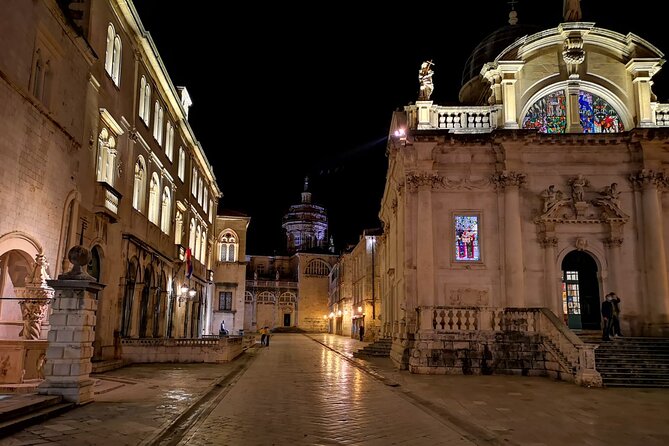
The Cathedral of the Assumption of the Virgin Mary is the largest church on the route. The guide discusses the church and its treasury, although the standard walk does not list entry as included.
You should think of this as an exterior introduction. The cathedral’s size and position make it an easy landmark, and the explanation gives you a reason to return during opening hours if you want to see the inside and treasury.
From there, the route reaches the monument to poet Ivan Gundulic and the Jesuit Steps. The steps create one of the Old Town’s most recognizable views and give the guide another chance to explain Dubrovnik’s literary and cultural life.
This section also introduces a little more vertical movement. The tour is only 90 minutes, but Dubrovnik’s lanes include stairs and uneven stone surfaces. Most people can take part, yet comfortable shoes are a sensible choice.
Prijeko Street Shows the Local-Scale Dubrovnik
Near the end, you leave the broad public spaces and stroll along Prijeko Street. The route moves through narrow side streets and presents the town from a more local angle.
This is the part I would value most after the main landmarks. Big sights help you identify Dubrovnik, but the side lanes show how the Old Town is organized at walking level. You see the tight urban pattern, small passages, and less formal spaces that are easy to miss if you stay only on Stradun.
The guide may point out small details such as street canals, building features, or customs connected to the city’s past. The exact stories depend on the guide, but the purpose is clear: to help you look beyond the postcard views.
The stop lasts about ten minutes, and the walk ends at Luza Square. From there, you can continue through the Old Town or make your own dinner plans without needing another transfer.
The Guides Make the Biggest Difference
The strongest part of this experience is the guide’s ability to connect dates and buildings with human stories. Mihaela has been praised for explaining Dubrovnik from Roman times to the present and for speaking frankly about the 1990s war. Davor has been described as a strong storyteller who clearly loves the city.
Petra has led an engaging history-focused walk, while Daniela has offered personal insight into life inside the Old Town. Goran has also been praised for combining history, food, culture, and practical dining suggestions, although you should not assume this standard walking tour includes a food tasting.
Several guides have also shared Game of Thrones filming tips and dinner recommendations. Those extras can be useful, especially if the walk is near the start of your stay and you still need ideas for the rest of your visit.
There is an important practical point here. A walking tour lives or dies by sound. One departure became difficult when two groups were combined, the radio system failed, and some people could not hear the guide. The maximum group size is 20, but equipment and spacing still matter. Stay near the guide and speak up early if you are losing the explanation.
Price, Pace, and What You Actually Receive
At $24.19 per person, the tour is priced as an affordable introduction rather than a full-day cultural program. You pay for a licensed local guide, local taxes, and the walking tour itself. There are no separate admission fees at the listed stops.
That makes the value strongest if you are new to Dubrovnik and want a usable framework in 90 minutes. You get the major route, basic history, a few local stories, and a chance to see the city in cooler conditions.
The value is weaker if you already know the Old Town well or want to enter several buildings. Nothing in the included program covers hotel transfers, transportation, or interior admission. You may need to budget separately for museums, churches, the cathedral treasury, or the city walls.
The pace is designed to suit the slowest person in the group. That is considerate for mixed-age parties, but it also means the walk may feel unhurried if you are a fast walker. Families with teenagers can take part, and the route has worked well for solo participants too.
Booking, Weather, and Cancellation Details
The experience is commonly reserved about 18 days ahead, so I would book before your arrival if your schedule is tight. Group discounts are available, and the mobile ticket makes it easy to keep confirmation on your phone.
A minimum number of participants applies. If the provider cannot run the walk because too few people book, you can choose another date or receive a full refund.
You can cancel for a full refund up to 24 hours before the start time. Cancellations or changes made less than 24 hours before the start are not refunded. Poor weather can also cancel the walk, in which case you are offered another date or a full refund.
Service animals are allowed, and most people can participate. Still, remember that this is a stone-street walking route with some narrow lanes and steps.
Who Should Book This Dubrovnik Night Walk?
I would recommend it to first-time visitors, couples, families, solo visitors, and anyone arriving in Dubrovnik during hot weather. It is particularly useful as a first-evening activity because you finish at Luza Square with the city layout fresh in your mind.
It also suits you if you care about the city’s political history and recent war, not just its architecture. The best guides bring both subjects into the walk and explain how the past still shapes local life.
I would skip it if you want a private tour, extensive museum access, or a detailed look inside every landmark. You should also think twice if you dislike group pacing or need guaranteed audio equipment. The experience is generally well rated at 4.8 out of 5, with 96 percent of participants recommending it, but the occasional guide or communication problem shows why expectations matter.
Should You Book It?
Book this tour if you want a low-cost, compact introduction to Dubrovnik with an evening setting and a local guide. The route covers the essential Old Town sights, and the personal accounts about the 1990s conflict can add weight that a guidebook often lacks.
Choose the latest available departure in summer if avoiding heat is your priority, and arrive early at the Amerling fountain. For the best experience, stay close enough to hear the guide, wear comfortable shoes, and treat the walk as an orientation rather than a substitute for entering Dubrovnik’s museums and churches.
FAQ
How long is the Dubrovnik By Night Walking Tour?
The tour lasts approximately 1 hour and 30 minutes.
Where does the tour begin?
It begins at the Amerling fountain next to the Dubravka gift shop, outside the walls at Pile Square. The listed meeting address is Brsalje ul. 2 in Dubrovnik. Look for a guide holding a blue umbrella.
Where does the tour end?
The walk ends at Luza Square on Luža ul. in Dubrovnik’s Old Town.
What sights are included on the route?
The route includes Pile Gate, the Franciscan Church and Monastery, Onofrio Fountain, Stradun, Luza Square, Rector’s Palace, the Cathedral of the Assumption of the Virgin Mary, the monument to Ivan Gundulic, and Prijeko Street.
Are entrance tickets included?
The walking tour and local guide are included, but no interior admission tickets are listed. The itinerary gives exterior explanations at the stops.
How many people can join the tour?
The maximum group size is 20 people. A minimum number of participants is also required for the tour to operate.
Can I cancel for a full refund?
Yes. You can cancel at least 24 hours before the local start time for a full refund. Cancellations or changes made less than 24 hours before the start are not accepted for a refund.
Newest reviews from Dubrovnik
- Dubrovnik: Private Tour to Montenegro – Kotor & Perast★ 5.0 · 3 reviews
- Walls of Liberty: A Self-Guided Audio Tour of Dubrovnik★ 3.5 · 3 reviews
- Korcula, Ston, Wine Tasting and Lunch – Tour from Dubrovnik★ 5.0 · 3 reviews
- Private Transfer Dubrovnik Airport to Dubrovnik★ 5.0 · 3 reviews
- From Dubrovnik Private tour to Korčula Island★ 3.7 · 3 reviews
- Private tours created by You from Dubrovnik region★ 5.0 · 3 reviews
- Dubrovnik History, Sweets & Liquors in a Private Palace★ 5.0 · 3 reviews
- Authentic private viewpoint wine&dine tour★ 5.0 · 3 reviews
Walking Tours, compared.

City Walls Early Morning or Sunset Walking Tour
Read our review →

Browse the lists this tour appears in