
Reviewed · KORCULA ISLAND TOURS
Korčula: Culture and History Walking Tour
Korčula Old Town is built like a stone fish skeleton, with narrow streets branching off a central spine to catch breezes and protect the town. This tour takes you from the Land Gate through the old lanes to St. Mark’s Cathedral, while your guide explains the town’s unusual design, Venetian past, and local life.
I like the focus on small details, from laundry drying above the lanes to the cats that seem to outnumber Old Town residents. I also like the private format, which gives you room to ask about Korčula’s battles, laws, buildings, and Marco Polo traditions. The main drawback is the short one-hour length: you’ll get a sharp introduction, not a slow, museum-style study.
In This Review
- Key points to know before you book
- Entering Korčula through the Land Gate
- Reading the fishbone street plan
- St. Mark’s Cathedral and the main square
- Korčula under Venetian rule
- The Marco Polo question
- Meeting Tina, Bojana, and the local guide team
- What one private hour really gives you
- Who will get the most from this walk
- Should you book the Korčula Old Town walk?
- FAQ
- How long does the Korčula Culture and History Walking Tour last?
- What languages are available?
- Is this a private tour?
- Where does the tour meet?
- What should I bring?
- Is the tour suitable for children and wheelchair users?
Key points to know before you book
- Start at the Land Gate: Enter Korčula’s historic core at one of its most useful orientation points.
- Follow the fishbone streets: See how the town’s clever layout shaped daily life and movement.
- Study St. Mark’s Cathedral: Admire the limestone carvings on the Gothic-Renaissance centerpiece.
- Hear the Venetian connection: Learn how Korčula became part of the Republic of Venice.
- Judge the Marco Polo story: Your guide explains Korčula’s claim about the famous Venetian traveler.
- Book for personal attention: This is a private one-hour walk with a licensed local guide.
Entering Korčula through the Land Gate
The tour begins at the Land Gate, although the exact meeting point can vary with the option you book. That makes it worth checking your confirmation carefully before setting out, especially if you are arriving in Korčula Town by ferry or coming from another part of the island.
From the gate, you move straight into the old town’s narrow stone streets. This is not a tour built around long transfers or a string of distant sights. The entire experience takes place inside Korčula’s historical nucleus, so your time goes toward buildings, lanes, stories, and the way people still use this old quarter.
The local limestone gives the town a unified look. Much of the Old Town was carved in the 15th and 16th centuries, and the buildings form a Gothic-Renaissance whole rather than a random collection of old walls. Your guide points out the construction details and explains where the limestone came from, giving the stone beneath your feet a practical story rather than treating it as mere decoration.
You may find the first few minutes useful simply for getting your bearings. Korčula’s lanes can look similar at first, but the tour helps you understand the plan behind them.
More Korcula Island days out:
- Korčula 3 ISLAND CATAMARAN TOUR Badija – Vrnik – Stupe
★ 4.6 · 104 reviews - Korcula: Buggy Safari with Local Food and Wine Tasting
★ 5.0 · 97 reviews - 1 Hour Private Walking Tour in Korcula
★ 5.0 · 64 reviews
Reading the fishbone street plan
The fishbone pattern is the tour’s most interesting design lesson. Streets branch from the main route in a deliberate arrangement, creating a compact town with a smart response to sun, wind, and defense. The supplied information does not assign every feature to one exact purpose, so your guide’s explanation matters here. Listen for how the strategic position of Korčula shaped its streets and buildings.
This layout also brings you close to ordinary details. You pass laundry hung out to dry and corners where cats move through the lanes as if they own the place. The cat population is described with a wink, but it also points to what makes this walk different from a formal architecture tour. You are seeing an old town that still functions as a neighborhood.
I like that balance. You get the broad story of urban planning, then notice the small signs of daily life. A grand cathedral and a line of washing can exist within the same few steps, and the contrast helps the town feel lived in rather than preserved only for sightseeing.
The lanes may feel tight, and this is not a good choice for anyone who needs step-free access. The experience is not suitable for wheelchair users, and comfortable shoes are important. The tour takes place rain or shine, so poor weather can affect how pleasant the stone streets feel.
St. Mark’s Cathedral and the main square
The walk leads to the main square, where St. Mark’s Cathedral is squeezed into the Old Town’s compact center. The setting is part of the appeal. The cathedral does not sit apart behind a huge open forecourt. Instead, it belongs to the close-grained town around it, with streets and buildings pressing in from every side.
Look closely at the cathedral’s carved limestone decoration. The carvings are one of the clearest places to see the skill behind Korčula’s stone-building tradition. Your guide can help you notice details that you might pass without understanding, especially if you are seeing the cathedral between ferry connections or on a quick stop in town.
The building also gives the tour a strong visual anchor. After hearing about the fishbone plan and the town’s strategic position, you arrive at a major religious and civic focal point. The route makes more sense when you connect the cathedral to the wider structure around it.
Do not expect a long interior visit or a separate cathedral entry unless your booked option says otherwise. The stated experience is a one-hour walking tour of the Old Town, with the guide showing and explaining key places along the route. Its strength is context and local interpretation, not an extended examination of one monument.
Korčula under Venetian rule
Korčula formed part of the Republic of Venice, and that political connection is central to understanding the town’s appearance. Venetian rule helps explain why the Old Town feels tied to the wider Adriatic world, with stone construction, maritime strategy, and a strong Gothic-Renaissance character.
Your guide also discusses battles and local laws, giving the town’s past a more practical shape. Instead of hearing only a list of dates, you can ask how power, defense, trade, and rules affected the people living within these walls. Bojana, one of the guides associated with this experience, is praised for covering those subjects in detail and answering questions throughout the walk.
The private format is especially useful here. If you want to know why a lane bends the way it does, how the town defended its position, or what Venetian control meant for Korčula, you can ask at once. A larger public group often requires you to save those questions for later, while a private tour gives the guide more space to follow your interests.
The language options are English, French, and Portuguese. The guide is licensed and local, which is important in a town where the best explanations often involve local traditions and disputed claims rather than only textbook facts.
More historic sites near Korcula:
- Lumbarda: Half-Day Kayaking and History with Wine delight
★ 5.0 · 49 reviews - Dubrovnik Old Town History Walking Tour
★ 5.0 · 1,684 reviews - Game of Thrones & History of Dubrovnik Tour
★ 5.0 · 628 reviews - Dubrovnik: Old Town History Walking Tour
★ 4.9 · 474 reviews
The Marco Polo question
Korčula’s connection with Marco Polo is one of the tour’s most entertaining talking points. The experience presents Marco Polo, the celebrated Venetian, as born in Korčula, then acknowledges that you may not accept the claim right away.
That approach is better than simply handing you a slogan. Ask your guide to explain the story and the evidence behind Korčula’s tradition. You may change your mind, or you may remain cautious, but you will understand why Marco Polo matters to the town and why the claim continues to be part of Korčula’s identity.
This is a good example of what a short local tour can do well. A guide can explain how history is remembered, debated, and used in a place. You are not just photographing a name connected to a famous explorer. You are hearing how Korčula tells its own story.
The tour does not promise a separate Marco Polo museum visit or a long stop at a dedicated attraction. Treat this part as a guided conversation woven into the walk.
Meeting Tina, Bojana, and the local guide team
The named guides connected with the experience include Tina and Bojana. Tina is praised for making Korčula interesting and informative, while Bojana brings a strong sense of local culture and covers subjects such as battles, laws, architecture, and ways of life. Other bookings may be led by a different licensed guide, so do not assume you will receive one particular person unless your reservation confirms it.
That variation is normal for a local walking experience, and the important point is the role the guide plays. You are not simply following a route on a map. You are relying on someone to connect architecture with local stories, answer questions, and adjust the walk to your interests.
The best use of your guide is to ask specific questions. If you care about the town’s stonework, ask where the limestone was hauled from. If the streets catch your eye, ask how the fishbone plan worked. If Marco Polo sounds doubtful, ask for the full local explanation. The tour has enough subject matter to support an active conversation, even though the scheduled time is brief.
What one private hour really gives you
At one hour, this is an orientation tour. You can cover the entire Old Town in outline, see the main sights, and leave with a framework for exploring on your own. You cannot expect every lane, church, interior, and historical episode to receive equal attention.
I see the short duration as both a benefit and a limit. It fits neatly into a day that includes a ferry arrival, a meal, or independent time in Korčula. It is also long enough to make the town’s layout click. But if you want extended photography stops, detailed architectural analysis, or time inside several buildings, you will need to continue independently after the guide leaves.
The private group setting improves the value for couples, families with older teenagers, or small parties who want direct access to a guide. At $70 per person, the price is not a bargain for a one-hour walk if you are paying alone or as a pair and want a long sightseeing session. It becomes easier to justify when the private attention matters to you, when you have limited time, or when your group wants the tour in English, French, or Portuguese.
A group of under-14 children is not suitable for this activity, and the experience is not designed for wheelchair users. If everyone in your party is comfortable walking on old stone streets, the format is simple and focused. Wear shoes with good support, and plan for rain as well as sunshine.
Who will get the most from this walk
I would choose this tour if you want Korčula to make sense quickly. First-time visitors often see a beautiful cluster of limestone buildings but miss the logic behind the streets. The guide gives you that structure, then fills it with stories about Venice, local laws, battles, stonework, cats, laundry, and Marco Polo.
It also suits you if you prefer a private conversation to a large scheduled group. The strongest praise for Tina and Bojana centers on their personal approach, local background, and willingness to answer questions. That is exactly where a private walk earns its keep.
You may want something else if your main goal is a long historical lecture, a full museum program, or extensive indoor sightseeing. The route is compact, the timing is fixed at one hour, and rain or shine conditions can make the walk less comfortable. You should also think twice if anyone in your party is under 14 or uses a wheelchair.
Should you book the Korčula Old Town walk?
Book it if you value local explanation over a checklist of sights. In one hour, you will learn how Korčula’s Old Town was built, why its streets follow a fishbone pattern, how Venice shaped the town, and why the Marco Polo story remains part of local culture.
At $70 per person, I would judge it by the value of the private guide rather than by the clock alone. For a small group with limited time, direct questions and a clear introduction can make the price worthwhile. For a solo visitor seeking the lowest-cost way to see the town, it may feel expensive.
Bring comfortable shoes, confirm the meeting point for your chosen option, and keep your schedule flexible enough for weather. If you want a focused first look at Korčula’s stone lanes and local stories, this walk is a sensible start.
FAQ
How long does the Korčula Culture and History Walking Tour last?
The tour lasts one hour. You can check available starting times when booking.
What languages are available?
The live tour guide is available in English, French, and Portuguese.
Is this a private tour?
Yes. The activity is offered as a private group experience with a licensed local tour guide.
Where does the tour meet?
The meeting point may vary depending on the option you book. Check the details for your selected option before going.
What should I bring?
Bring comfortable shoes. The tour takes place rain or shine, so you should also be prepared for the weather.
Is the tour suitable for children and wheelchair users?
The tour is not suitable for children under 14 or for wheelchair users.
More Walking Tours in Korcula
- Korcula private walking tour 1 Hour
★ 5.0 · 13 reviews - Korčula for Early Risers and Coffee Lovers Private Walking Tour
★ 4.5 · 3 reviews - Dubrovnik: Old Town Walking Tour
★ 4.8 · 5,174 reviews - Dubrovnik Discovery Old Town Walking Tour
★ 5.0 · 4,458 reviews
Newest reviews from Korcula
- From Dubrovnik Private tour to Korčula Island★ 3.7 · 3 reviews
- Korcula Archipelago Kayak Tour★ 4.0 · 3 reviews
- Korčula for Early Risers and Coffee Lovers Private Walking Tour★ 4.5 · 3 reviews
- Island Stupe / Moro Beach Transfer★ 4.0 · 5 reviews
- Island Badija – Yellow Taxi Cat★ 3.5 · 6 reviews
- Croatia Islands Private Hike & E -Bike Tour on Korcula Island★ 5.0 · 6 reviews
- Boat discovery: private one-day Korčula adventure★ 5.0 · 9 reviews
- Korčula: Sail Away – tour with traditional craftmanship boat★ 4.4 · 10 reviews
Korcula Island Tours, compared.
Korcula Buggy (Official) Safari Tour -Local Food & Wine Tasting-
Read our review →
Peljesac Peninsula & Korcula Island Day-Trip from Dubrovnik
Read our review →
Ston and Korcula Island Day Trip from Dubrovnik with Wine Tasting
Read our review →
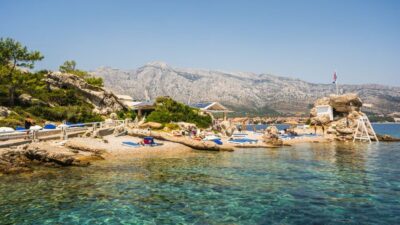
Korčula 3 ISLAND CATAMARAN TOUR Badija – Vrnik – Stupe
Read our review →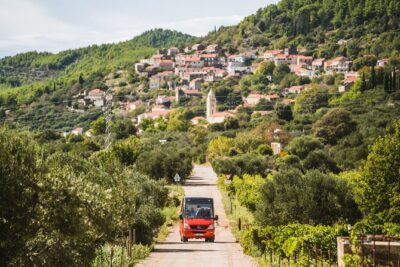
Korcula Bike & Wine Tour | Wine Tasting in Lumbarda
Read our review →Browse the lists this tour appears in