
Reviewed · CAVTAT & KONAVLE TOURS
Visit Shell Museum Cavtat
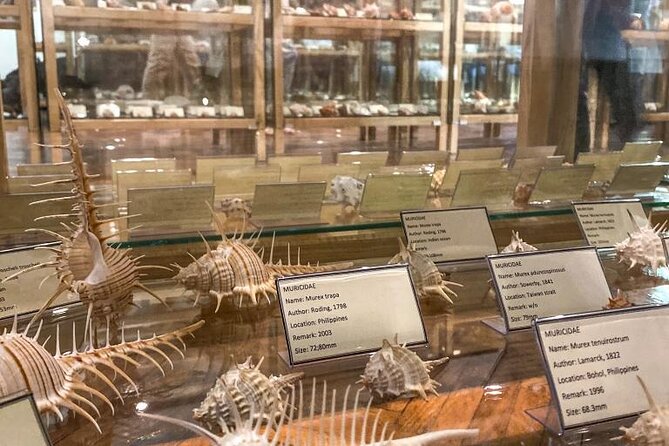
Cavtat’s Glossus Humanus turns a small seaside museum into a surprisingly colorful stop, with thousands of shells arranged for close viewing. I love the wide range of shapes and colors, and I like that the displays include information about shell formations rather than presenting the collection as decoration alone.
I also love the low price and short visit, especially when you need an easy activity before or after a flight from Dubrovnik Airport. The main consideration is the museum’s size: you should expect a focused 30 to 60-minute stop, not a full-day attraction, and the advertised collection count varies between more than 3,500 species and 2,500 species.
In This Review
- Key points at a glance
- Thousands of shells in a compact Cavtat museum
- What you see during the 45-minute visit
- The collection’s family story
- Shell formations from oceans around the world
- Why the colors and shapes matter
- A smart stop before or after Dubrovnik Airport
- Is $8.41 good value?
- Who will enjoy Glossus Humanus most?
- Visiting with children
- Group size, timing, and pace
- What makes the experience memorable
- Should you book the Shell Museum in Cavtat?
- FAQ
- Where is the Shell Museum Cavtat located?
- How long does the visit take?
- What is included in the admission price?
- How much does admission cost?
- Is the experience offered in English?
- How many shell species can I see?
- Is there an audio guide?
- Is there a children’s activity?
- What are the opening hours?
- Can I cancel for a full refund?
Key points at a glance
- More than 2,500 shell species: The collection includes examples from oceans around the world, with the experience describing more than 3,500 different species in its highlights.
- A 45-minute visit: You can see the exhibition at an unhurried pace without giving up most of your day.
- Useful near DBV Airport: Cavtat makes this a practical stop when your flight schedule leaves you with spare time.
- Family-friendly price: Basic admission costs about $8.41 per person, with an optional Junior Shell Explorer priced at €5.
- Personal collection story: The shells were gathered by one family over several generations, adding a human side to the display.
- Small group limit: The activity accepts a maximum of 20 people, which helps keep the visit manageable.
Thousands of shells in a compact Cavtat museum
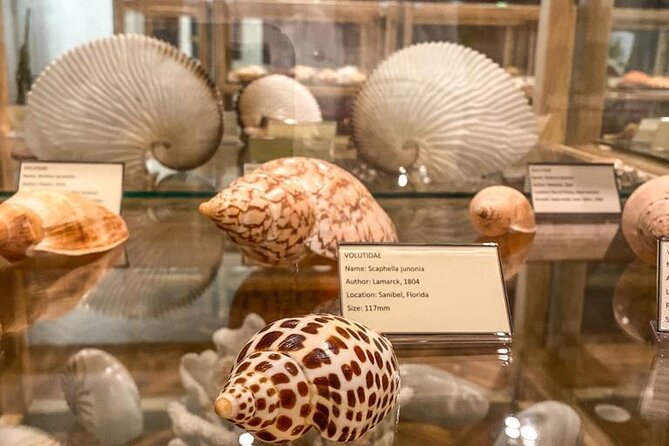
The main reason to visit Glossus Humanus is simple: you get to see a large shell collection without committing half a day to it. The exhibition brings together shells from all of the world’s oceans, showing how much variety can come from creatures many people notice only as souvenirs on a beach.
The collection is described in two ways: the highlights refer to more than 3,500 different species, while the visit details refer to 2,500 species. I would not get hung up on the exact number. Either figure points to a substantial display for a museum visit lasting about 45 minutes.
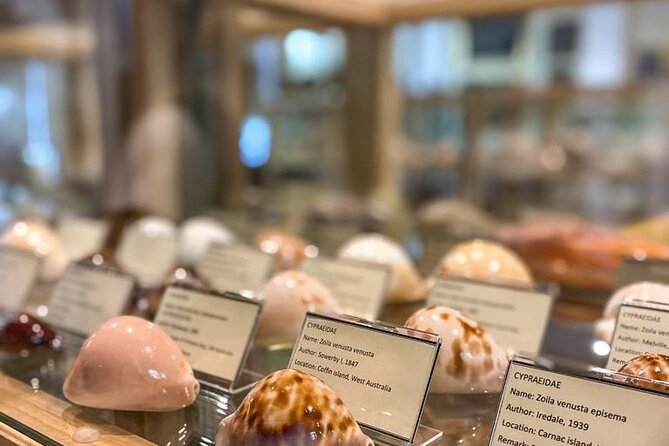
The appeal is visual first. You can expect unusual forms, strong colors, and plenty of differences in size and surface. One shell may look smooth and polished, while another has ridges, points, spirals, or an almost sculpted shape. Informative labels help explain what you are seeing, so the visit has more substance than simply walking past rows of attractive objects.
More Cavtat and Konavle trips:
- Dubrovnik or Cavtat: Lokrum Island and Betina Cave Boat Tour
★ 4.5 · 572 reviews - From Dubrovnik/Cavtat: Blue Cave, Sunj Beach Speed Boat Tour
★ 4.8 · 502 reviews - From Cavtat: Bosnia, Herzegovina, and the Old Bridge Tour
★ 4.7 · 188 reviews
What you see during the 45-minute visit
Your visit begins and ends at Glossus Humanus, Shell Museum Cavtat, at Svetog Nikole 6. The listed itinerary has one stop, the exhibition itself, and basic admission is included in the price.
A guide leads you through the display and shares facts about shell life and formation. No guide name is provided, so you should not book this expecting a particular host. The important point is that the basic experience includes guidance through the exhibition, rather than requiring you to rely only on labels.
The visit is paced for a short stop. At around 45 minutes, you have enough time to look carefully at the displays without needing to plan your whole afternoon around them. The stated duration is approximately 30 minutes to one hour, so your timing will depend on how closely you read the labels and how much time your group spends with the guide.
I would plan on the full 45 minutes, with a little flexibility. If you are traveling with children, allow extra time for the shapes and colors that catch their attention. If you are fitting this between transport connections, the shorter end of the estimate may be more realistic.
The collection’s family story
The shell display has a personal origin. The collection was gathered by one family across several generations, and that detail changes how the museum feels.
You are not simply looking at a commercial display assembled for a passing attraction. The collection reflects years of collecting and a clear sense of family pride. That personal background gives the exhibition a warmer character, especially if you enjoy small museums built around a passion.
It also helps explain why the museum works well as a compact experience. A family collection can cover a wide range of forms and places without trying to imitate a large national museum. The scale feels suited to Cavtat, where you can add a specific interest to a day by the coast rather than spend hours indoors.
Shell formations from oceans around the world
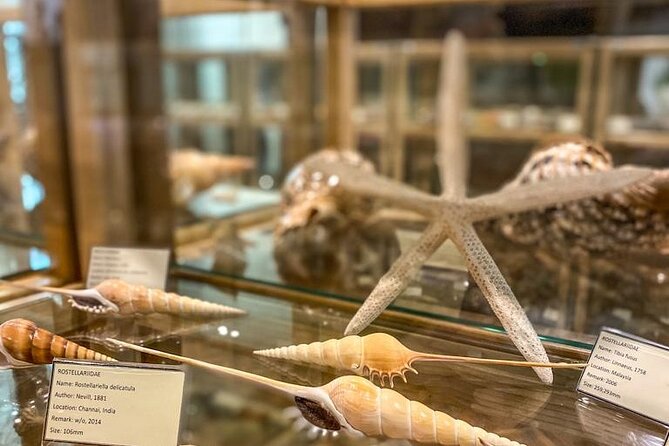
The educational value comes from comparing the shells. The guide introduces different shell formations and shares facts about how shell life works, giving you a way to understand the collection beyond color and appearance.
The material is suitable for a general audience. You do not need specialist knowledge to appreciate the differences, and the exhibition’s information helps you notice details you might otherwise miss. Look for the changes in shape, texture, pattern, and construction as you move through the display.
The museum also gives you a useful reminder that seashells are not all variations of one basic object. Their forms differ widely across ocean environments and species. That makes the visit a good fit for children who enjoy nature, but adults who like design, collecting, or natural history can find plenty to hold their attention too.
Do not expect a long scientific lecture. The visit is short, and the available information points to an approachable introduction rather than an advanced course in marine biology. If you want a light educational stop with strong visual appeal, the format should suit you.
More museums and galleries in Dubrovnik:
- Dubrovnik: Red History Museum Regular Ticket
★ 4.6 · 134 reviews - Skip the Line: Love Stories Museum Admission Ticket
★ 5.0 · 87 reviews - Museum of Selfies & Illusions Dubrovnik Ticket
★ 4.0 · 23 reviews - Love Stories Museum Skip-the-Line Entrance Ticket
★ 4.5 · 23 reviews
Why the colors and shapes matter
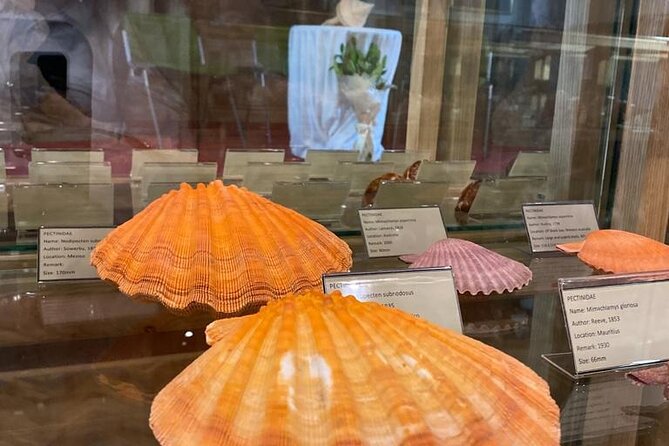
The strongest part of the experience is the display itself. The shells are described as beautifully arranged, with informative labels and a wide range of colors and shapes. That combination matters because a shell collection can become repetitive if it is presented as one long row of similar objects.
Here, variety gives you a reason to keep looking. You might find yourself comparing forms that seem almost architectural, then turning to shells with delicate patterns or unexpected colors. The appeal is easy to understand even if you know little about mollusks.
I would give yourself time to look at the cases at your own pace. The guide provides the main structure, but the exhibition also rewards quiet observation. This is not an attraction you need to rush through simply because it is small.
Photography rules are not provided, so ask on arrival if taking pictures matters to you. The same applies to specific display arrangements, since no room-by-room details are available in the supplied information.
A smart stop before or after Dubrovnik Airport
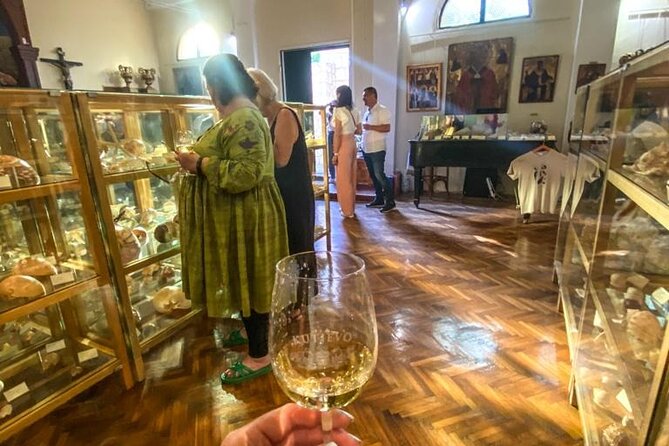
Cavtat’s location makes the museum especially practical for people using Dubrovnik Airport. The attraction is identified as a good stop when going to or from DBV Airport, so it can help fill a gap in your schedule.
That does not mean you should cut your airport timing close. Your flight, luggage, transport, and check-in needs come first. Instead, consider the museum when you have a comfortable block of spare time and want an activity with a clear end point.
The daily hours are listed as 10 AM to 4 PM. If you arrive early in the morning or later in the afternoon, the museum may not fit your plans. Check the opening hours for your date, since the posted operating period covers July 1, 2022 through July 2, 2027, and schedules can change.
Because the visit lasts less than an hour, it pairs well with other time in Cavtat. You can treat it as a specific stop rather than building an entire outing around the museum. The close connection to public transportation also helps, although the available information does not specify routes, fares, or travel times.
Is $8.41 good value?
At about $8.41 per person, basic admission is easy to justify if you have an interest in shells, nature, or small local museums. You are paying for a short visit, but the collection size gives the price weight. Seeing thousands of species in 30 to 60 minutes is a solid use of a modest budget.
The value is best for families. A group can enjoy a visual attraction without paying for a long guided tour or a major museum ticket. Children may respond to the unusual forms immediately, and the Junior Shell Explorer costs €5 if you want an added child-focused option.
The optional audio guide app costs €3. That may be useful if you prefer to explore independently or want more information than the basic tour provides. Since a guide already leads the exhibition, you do not necessarily need the app. I would choose one or the other based on how your group likes to visit museums.
The Junior Shell Explorer is a separate €5 purchase, not part of basic admission. If you are visiting with children, ask what it includes before paying, since the supplied information gives the price but not the exact activities or materials.
Who will enjoy Glossus Humanus most?
I would recommend this museum to several kinds of visitors:
- Families looking for a short, affordable activity
- Anyone with an interest in shells, oceans, collecting, or natural forms
- People with spare time near Dubrovnik Airport
- Visitors who prefer small personal museums to large formal institutions
- Couples or solo visitors who want a calm indoor stop in Cavtat
- Anyone seeking a low-cost addition to a day in the area
The museum is also suitable for most people physically, and service animals are allowed. It is near public transportation, which makes it easier to include without a car.
This is less suitable if you want a major attraction with multiple rooms, extensive facilities, or several hours of entertainment. The entire experience is built around one exhibition, so its success depends on your interest in the subject and your appreciation for careful display.
Visiting with children
Glossus Humanus has a clear family advantage. Shells have an immediate visual pull, and children can compare colors, sizes, curves, and textures without needing a long attention span.
The short duration is helpful. A 45-minute museum visit is long enough to feel worthwhile but short enough to avoid the fatigue that can come with a large cultural attraction. You can also use the visit as a change of pace during a day outdoors.
The Junior Shell Explorer costs €5 and is not included with admission. Since the exact contents are not specified, ask at the museum whether it suits your child’s age and interests. The regular exhibition itself remains the main attraction, so you do not need the add-on to make the visit work.
I would encourage children to look for the biggest differences between shells rather than simply counting them. Ask them which forms look smooth, pointed, striped, or twisted. That turns a quick visit into a simple nature activity without requiring extra equipment.
Group size, timing, and pace
The maximum group size is 20 people. That is small enough to keep the guided portion from feeling like a large crowd, though the museum’s compact size means the room may still feel busy if the group arrives together.
A mobile ticket is provided, and confirmation is received when you book. The experience is offered in English, so English-speaking visitors can follow the guide and the exhibition information.
I would reserve a time that leaves breathing room around the visit. The stated duration is approximate, and you may want a few extra minutes to arrive, begin the tour, and finish looking at the collection. This matters most if you are connecting the museum with airport transport.
Free cancellation is available if you cancel at least 24 hours before the start time. Cancellations made less than 24 hours ahead, along with changes during that final 24-hour period, are not accepted for a refund. The cut-off uses local Croatian time.
What makes the experience memorable
The museum’s strongest quality is not its size or technology. It is the combination of a serious collection, a personal family background, and a display that makes natural objects look almost artistic.
The arrangement of the shells is particularly important. Attractive presentation draws you in, while the labels and guide give you reasons to keep looking. You get the pleasure of color and shape first, then a little context about how the shells formed and where they come from.
I also appreciate the museum’s practical scale. You do not need to devote a whole morning to it, and you can visit without spending much. That makes it easy to recommend as an addition to a Cavtat day, especially when your schedule has an awkward gap.
The only real limitation is that the experience cannot offer the breadth of a full marine museum. If you expect live animals, large interactive galleries, or detailed scientific exhibits, you may finish quickly. Go for the collection and the quiet pleasure of examining unusual shells, and the visit makes sense.
Should you book the Shell Museum in Cavtat?
Book Glossus Humanus if you want a short, inexpensive, visually appealing museum visit with an educational angle. It is particularly useful near Dubrovnik Airport, and families get good value from the modest admission price and optional Junior Shell Explorer.
I would skip it only if your schedule is too tight for the museum’s 10 AM to 4 PM opening window, or if you want a large attraction that can occupy several hours. For everyone else, the combination of thousands of shells, family collecting history, English guidance, and a 45-minute format makes this an easy Cavtat add-on.
FAQ
Where is the Shell Museum Cavtat located?
Glossus Humanus, Shell Museum Cavtat is at Svetog Nikole 6, 20210 Cavtat, Croatia.
How long does the visit take?
The approximate duration is 30 minutes to one hour. The guided exhibition portion is listed as about 45 minutes.
What is included in the admission price?
Basic admission to the shell exhibition is included.
How much does admission cost?
The listed price is about $8.41 per person.
Is the experience offered in English?
Yes. The experience is offered in English.
How many shell species can I see?
The highlights describe more than 3,500 different species. The visit details refer to 2,500 species, so the exact advertised count is not fully consistent.
Is there an audio guide?
Yes. An audio guide app is available for an additional €3.
Is there a children’s activity?
Yes. The Junior Shell Explorer is available for an additional €5. The supplied information does not specify its exact contents.
What are the opening hours?
The museum is listed as open Monday through Sunday from 10 AM to 4 PM during the stated operating period.
Can I cancel for a full refund?
Yes, if you cancel at least 24 hours before the experience start time. Cancellations or changes made less than 24 hours before the start time are not eligible for a refund.
Newest reviews from Dubrovnik
- Walls of Liberty: A Self-Guided Audio Tour of Dubrovnik★ 3.5 · 3 reviews
- Dubrovnik: Private Tour to Montenegro – Kotor & Perast★ 5.0 · 3 reviews
- Korcula, Ston, Wine Tasting and Lunch – Tour from Dubrovnik★ 5.0 · 3 reviews
- Private Transfer Dubrovnik Airport to Dubrovnik★ 5.0 · 3 reviews
- From Dubrovnik Private tour to Korčula Island★ 3.7 · 3 reviews
- Dubrovnik History, Sweets & Liquors in a Private Palace★ 5.0 · 3 reviews
- Private tours created by You from Dubrovnik region★ 5.0 · 3 reviews
- Dubrovnik: Game of Thrones Walking, Car and Boat Tour★ 5.0 · 3 reviews
Cavtat & Konavle Tours, compared.
From Dubrovnik/Cavtat: Blue Cave, Sunj Beach Speed Boat Tour
Read our review →

Horseback Riding in Konavle Region with Transport from Dubrovnik
Read our review →
Brand New Mercan Excursion 34 Private Tour From Dubrovnik Cavtat
Read our review →Browse the lists this tour appears in